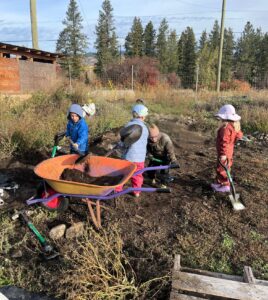
On a typical morning in our community garden, you might see a few children kneeling between the beds, pressing seeds into the soil. Nearby, someone is following a beetle across a stepping stone, and a younger friend is carrying a watering can almost as big as they are.
Our community garden is a place of discovery, wonder and meaningful work for children at the Early Years Centre and Okanagan Waldorf School. As part of their programs, children spend time working and playing in the garden, experiencing the changing seasons and learning to care for the living world around them.
Little hands in the soil
For our youngest children, the garden is a place to explore with their whole bodies. Digging in the soil, noticing insects and watching plants grow invite curiosity and imaginative play.
Young children learn by doing and by imitating the adults around them. When a teacher kneels to pull weeds, small hands soon join in. Children feel the cool, damp earth, smell the mint as they brush past it and taste peas straight from the pod. Finding a worm can be the highlight of the morning, and sunflowers that grow taller than the teachers are a source of endless amazement.
Through this kind of play, children begin a joyful relationship with the natural world that can last a lifetime.
Growing patience, perseverance and responsibility
As children get older, gardening gives them chances to practise patience, perseverance and responsibility.
Seeds planted in spring may take until late summer to bear fruit, so children learn to wait and to look forward to what’s coming. Some weeks bring weeds, hungry insects or a dry spell that wilts the seedlings, and the children learn to keep going and try again. When a bed is theirs to water and tend, they feel the garden counting on them, and most children take that trust to heart.
There is something deeply rewarding in seeing how small, steady acts of care help a garden flourish. You can see it on the face of a child pulling up a carrot they planted months earlier, or sharing a basket of beans with their class.
Why gardening belongs in Waldorf education
In Waldorf education, we bring learning to life through the senses, movement and purposeful activity, and the garden offers all of these at once.
Children watch seeds sprout, and plants grow over the weeks, handle the leaves and taste what they harvest, and what they learn this way tends to stay with them. Digging, carrying, raking, Little hands, big shovels: our young gardeners prepare the beds for winter.and planting keep their bodies busy too, which suits the many children who learn best on the move. The tasks themselves are real: the beds need watering, the compost needs turning, and the harvest has to be gathered. Children can tell when their work matters, and they take pride in it.
The garden also connects children to the rhythm of the year, which runs through so much of Waldorf education, from the daily routine to our seasonal festivals. They plant in spring, watch things grow through summer, bring in the harvest in autumn and put the beds to rest for winter.
Growing together
We are fortunate to have a beautiful community garden where children of all ages can connect with nature, contribute in meaningful ways and enjoy the simple pleasure of growing together. Season after season, we love watching the children and the garden grow side by side.